Photo: rannpháirtí anaithnid (comhrá), CC BY-SA 3.0, via Wikimedia Commons
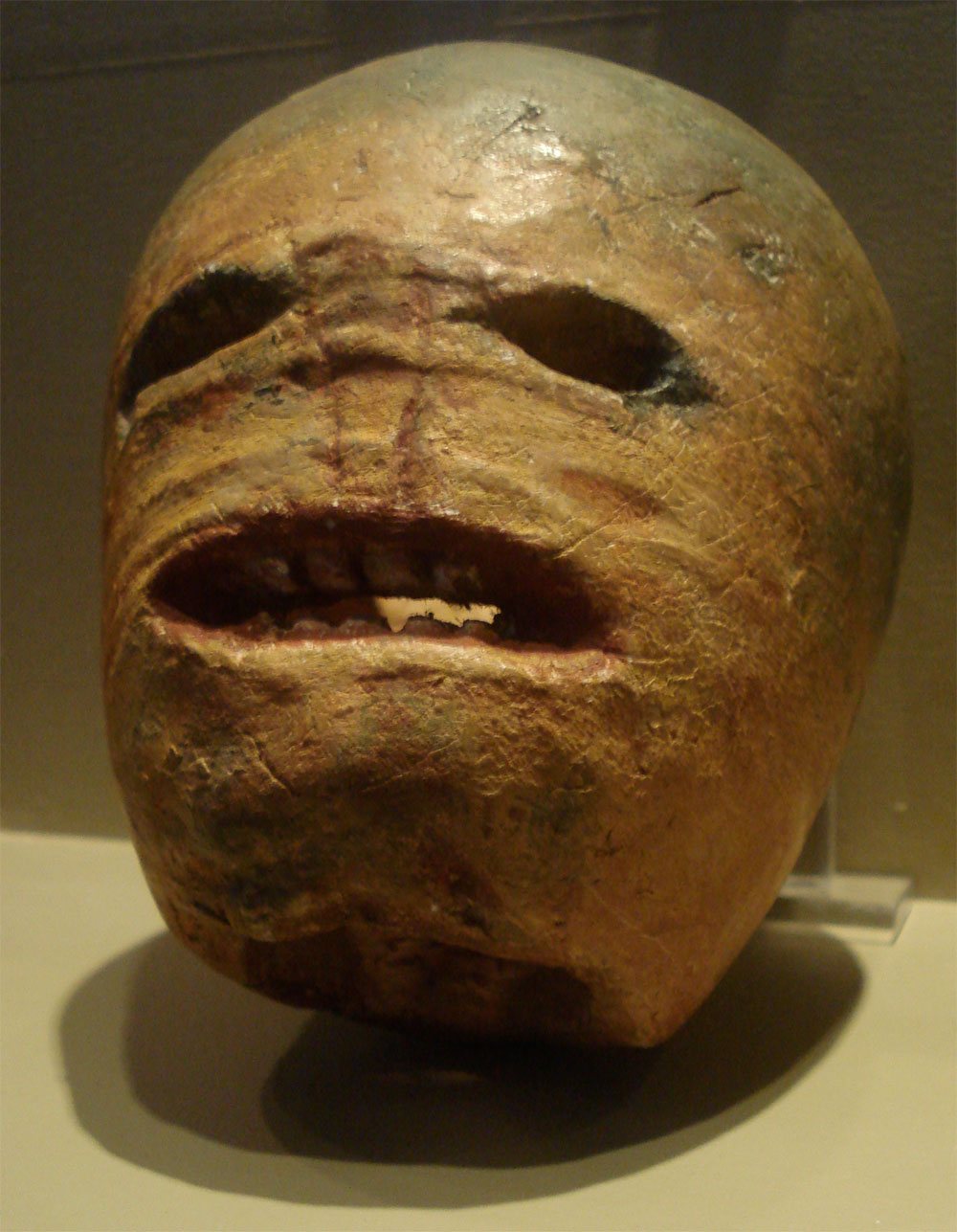
Look at the photo at the top of this page for a moment. That lumpy, hollow-eyed face with the lopsided teeth is a jack-o'-lantern. It is not a pumpkin. It is a turnip, and it is a plaster cast of the sort of lantern that people in rural Ireland carved for Halloween long before anyone there had seen a pumpkin.
I find it far more unsettling than any grinning orange gourd. It looks less like a decoration and more like something that has been sitting in a field waiting for you.
The pumpkin version on your porch this week is an American update of an old Irish and Scottish habit. The idea traveled, the vegetable changed, and somewhere along the way the whole thing went from slightly frightening to mostly cheerful.
Lanterns for the night the dead came close
In Ireland, Scotland and parts of northern England, the end of October was the time of Samhain, the old Gaelic festival that marked the end of the harvest and the start of winter. It was widely believed to be a night when the boundary with the other world thinned and spirits wandered about.
People carved faces into turnips, swedes and mangelwurzels, hollowed them out and put a candle or a lump of burning coal inside. Folklorists generally describe these lanterns as a way of warding off wandering spirits, or of lighting the way home on a dark night when you did not particularly want to meet anything. In Scotland the hollowed swede or turnip is still called a "tumshie" lantern in some places, and children carried them around while guising, the Scottish ancestor of trick-or-treating.
The National Museum of Ireland holds a cast of one of these turnip lanterns from the early twentieth century, which is the face you are looking at above.
So who was Jack?
The name came before the Halloween lantern. In English, "jack-o'-lantern" was used in the seventeenth century for a night watchman, a man with a lantern, and later for the will-o'-the-wisp, the eerie flickering lights that sometimes hover over marshes and bogs.
The Irish folk tale that attached itself to the carved lantern is about a man usually called Stingy Jack. The details shift with every telling, but the bones are the same. Jack is a drinker and a cheat who tricks the Devil more than once and gets him to promise never to take Jack's soul. When Jack dies, heaven will not have him. The Devil keeps his promise and will not take him either. Instead he tosses Jack a single burning ember to light his way, and Jack puts it inside a hollowed turnip and wanders the dark forever.
It is a good story, and like most good folk stories it was almost certainly stitched onto the custom after the fact. The lanterns were being carved whether or not anyone had heard of Jack.
How the pumpkin took over
Pumpkins are native to the Americas, and they were not part of the European tradition at all. When large numbers of Irish and Scottish emigrants arrived in North America in the nineteenth century, especially during and after the Great Famine of the 1840s, they brought Halloween customs with them.
They also found a much better vegetable for the job. A pumpkin is bigger, softer and hollow already. Anyone who has tried to scoop out a raw turnip with a spoon will understand at once why nobody went back. (Raw turnip is roughly as forgiving as a block of wood. I would not wish the job on anyone with a deadline.)
By the later 1800s, carved pumpkin lanterns were showing up in American magazines and party guides as a Halloween decoration. Over the twentieth century, as American Halloween grew into the big commercial holiday it is today, the pumpkin version made its way back across the Atlantic. Most British and Irish kids now carve pumpkins too, although turnip carving has had a small revival among people who like the old ways or just want the creepiest lantern on the street.
The pumpkin bred for carving
The modern carving pumpkin is itself a fairly recent invention. For a long time people simply used whatever field pumpkins they had. In the 1970s a Massachusetts farmer named John Howden developed a variety with a round shape, a sturdy stem and walls that are reasonably thin and easy to cut. The Howden pumpkin and its many descendants are the reason supermarket pumpkins in October all look roughly alike.
Those pumpkins are grown to be carved, not cooked. They are edible, but the flesh is stringy and watery, which is why pie makers reach for smaller sugar or pie pumpkins instead.
Getting a better lantern this year
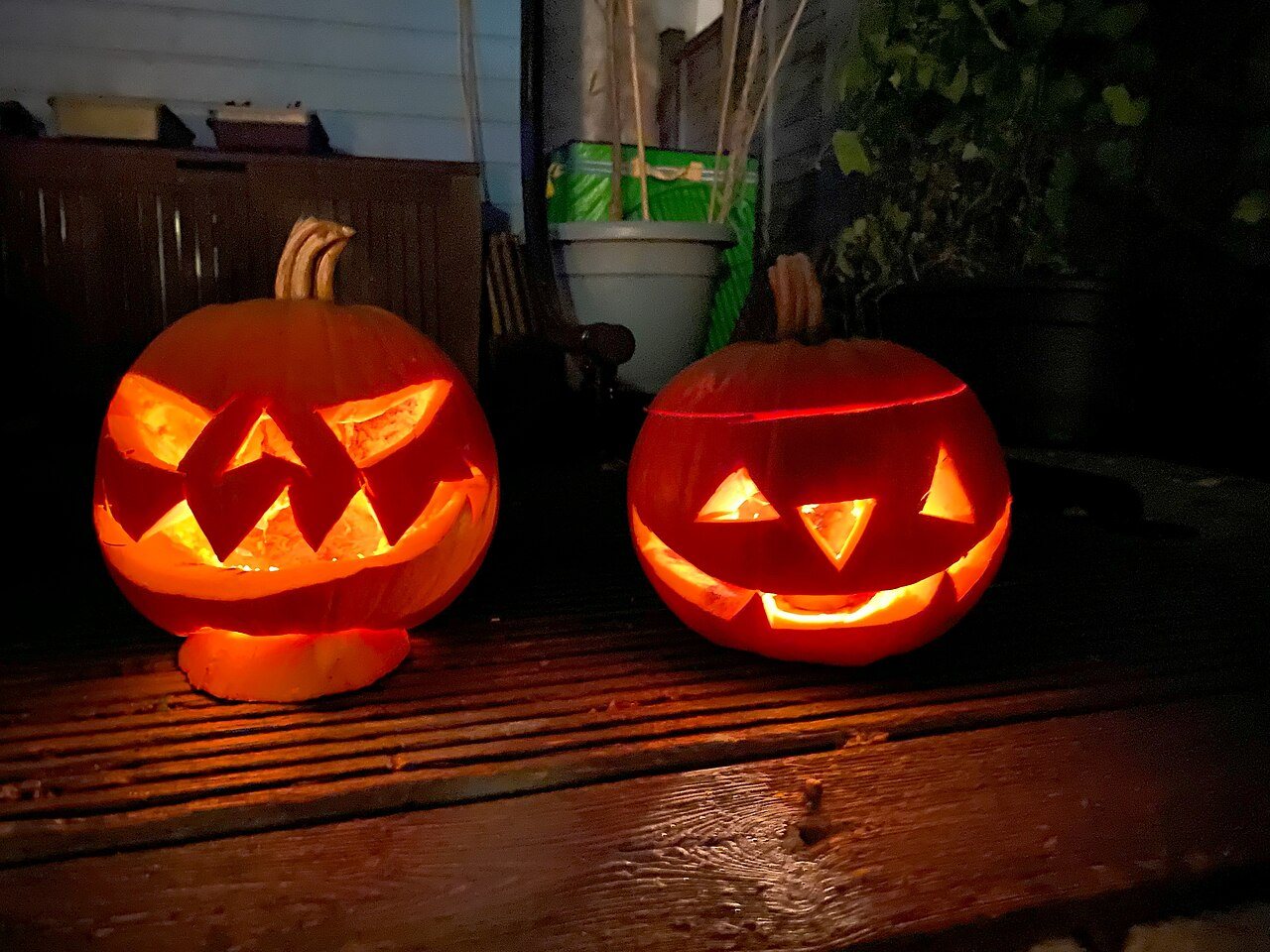
Two carved pumpkin jack-o'-lanterns glowing orange on a wooden deck at night. Photo: Lirazelf, CC BY-SA 4.0, via Wikimedia Commons
If you are carving this week, a few things make a real difference. Pick a pumpkin that is firm all over with a solid, green-brown stem, and give it a knock: it should sound hollow. Avoid soft spots, which only get worse once you cut into the skin.
Cutting the opening in the back or the bottom, instead of a lid around the stem, makes the pumpkin easier to light and tends to help it hold its shape for longer. Scrape the inside wall where the face will go until it is about an inch thick, which makes the carving easier and lets more light through.
Once it is cut, the enemy is drying out and rot. Keeping the lantern somewhere cool and out of direct sun helps a lot, and many people rub petroleum jelly or vegetable oil on the cut edges to slow the shriveling. A battery tea light is safer than a real candle around children and costumes, and it does not cook the pumpkin from the inside.
And if you want to try a turnip, go ahead. Pick the biggest one you can find, use a sturdy spoon and a sharp knife, and give yourself a couple of hours. It will not be pretty, but that was always rather the point.
Enjoyed this story?Get a new one every day on social.