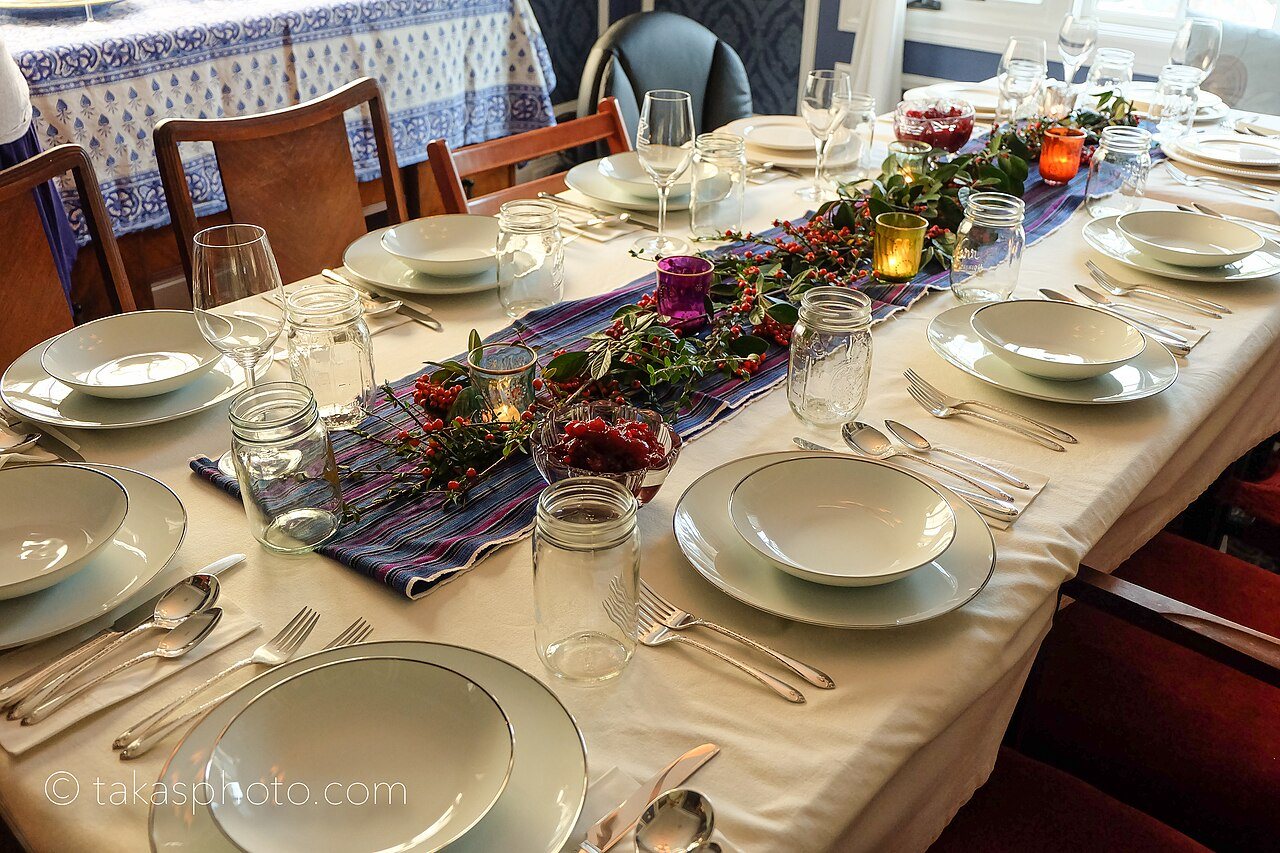
Photo: takasphoto.com, CC BY-SA 2.0, via Wikimedia Commons
On December 4, 2007, somebody on Usenet signed off a post with "Happy Friendsgiving Y'all!!!" That line, with all three of its exclamation marks, is one of the earliest uses of the word that Merriam-Webster's researchers have been able to find. The same year it also showed up on Twitter, then a very new place to be.
Neither of those people stopped to define it, and I find that the most interesting detail in the whole story. The word was already doing its job. You read it once and you know what it means: Thanksgiving, but with the people you picked.
Nineteen years later it has its own cookbooks, its own movie and a dictionary entry. Thanksgiving this year falls on November 26, so a lot of group chats are about to start arguing over who is bringing the stuffing.
The dinner existed long before the word
People were eating Thanksgiving with friends for generations before anyone gave it a name. Students stuck far from home did it, as did anyone who had fallen out with their relatives or simply couldn't face the drive.
The most famous early version may be Alice and Ray Brock's table in Massachusetts. In the 1960s the Brocks had friends over for Thanksgiving, many of them estranged from their own families. Arlo Guthrie went in 1965, and the dinner gave him part of the story behind "Alice's Restaurant," the long, deadpan talking-blues song that some American radio stations still play on the holiday.
Television got there too. A Charlie Brown Thanksgiving, from 1973, is basically a meal thrown together by friends, with the kids in charge and the adults nowhere near it. Woman's World called it "perhaps an early example of Friendsgiving" in 2022, and I'd drop the "perhaps."
One thing it isn't is a product of the sitcom Friends. The show had plenty of Thanksgiving episodes, and everyone assumes the connection, but Merriam-Webster says it didn't come up with the word.
2011, the year it broke out
For a few years the word mostly stayed in small corners. Lifestyle articles began using it in 2008 and 2009, including pieces in the Pensacola News Journal and the Plain Dealer in Cleveland. Before 2012 hardly anybody was typing it into Google.
Then came 2011. A Baileys Irish Cream campaign built an ad around the idea, and an episode of The Real Housewives of New Jersey made a plot point of it. I can't think of two more fitting parents for a modern American holiday than a liqueur company and a reality show. Searches jumped, and by 2013 people were looking it up regularly. That same year the Emily Post Institute was fielding etiquette questions about it, which is about as firm a sign as you can get that a custom has arrived.
How the holiday got commercial
Once a word catches on, the marketing follows. Butterball filed to trademark "Butterball Friendsgiving." In 2019 Emily Stephenson published The Friendsgiving Handbook, and in 2020 Nicol Paone wrote and directed a comedy called Friendsgiving for Saban Films. Merriam-Webster added the word to its dictionary in January of that same year.
Emily Brewster, a senior editor there, explained the success to NPR in 2025 about as simply as it can be explained. People "can see the word, know instantly what it means." Plenty of blended words never get that far (please don't ask me to use "hangry" in a sentence about a dinner party), but this one needs no explanation at all.
Who actually celebrates it
Nobody has good numbers. There are no official statistics, and NPR's reporting last year pointed to online surveys suggesting up to about 20 percent of Americans take part. I'd treat that as a rough figure, since online polls about holidays tend to be loose. Still, the picture is consistent: it skews younger, and it seems to have grown after the pandemic.
The surprise for me is that it hasn't replaced anything. Most people treat it as an extra dinner in the run-up to the family one, not a substitute. It has also traveled. The idea has reached Britain, where Thanksgiving isn't a public holiday at all, and one survey there found that 42 percent of millennials and Gen Z had taken part in a Thanksgiving or Friendsgiving meal.
If you're hosting this year
The rules are loose, which is the appeal, but a few habits save a lot of trouble. Friendsgiving is usually a potluck, so divide the menu early and in writing, or you will end up with four mac and cheeses and no gravy. Check for allergies and diets while you're at it.
Pick a date well clear of the big day, too. The weekend before Thanksgiving is the obvious slot, and that makes it November 21 or 22 this year, though anyone flying home that week may be packing already. An earlier weekend in November often works better for a group.
And if you're the host, do the turkey or don't, but say so up front. Nobody has ever written a rule saying there has to be one, as the Brocks' guests and the Peanuts gang would both confirm. In the Charlie Brown special, dinner is toast, popcorn, pretzels and jelly beans, and it's still a Friendsgiving by any reasonable definition.
Enjoyed this story?Get a new one every day on social.