Photo: Leon Brocard, CC BY 2.0, via Wikimedia Commons
Gordon Ramsay was born in Johnstone, near Glasgow, on November 8, 1966, which makes him 60 today. It is a slightly strange number to attach to someone who still runs across kitchens on camera as if he were 30 and late for service.
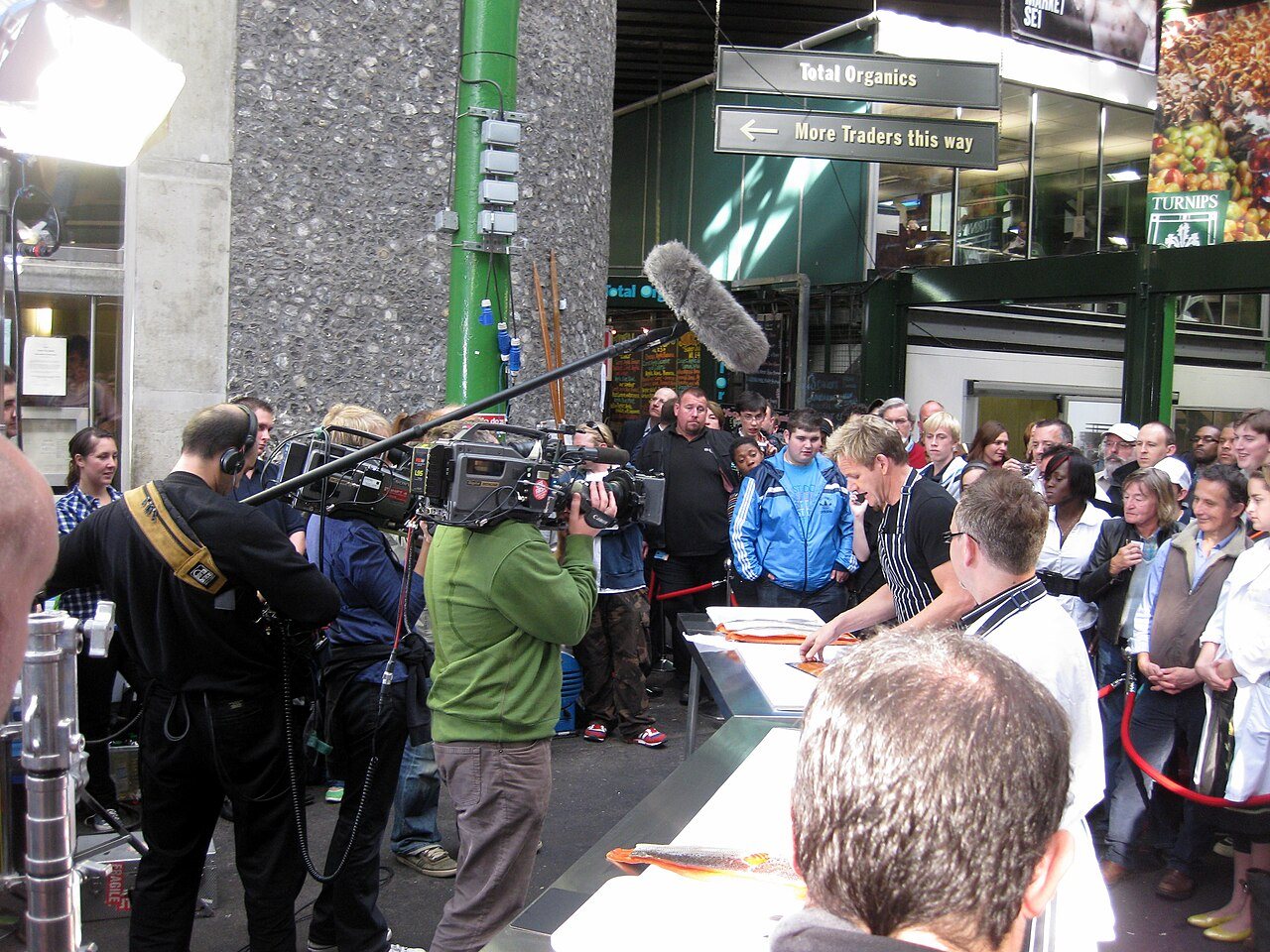
Most people know him as a volume setting. He is the man who yells at line cooks on Hell's Kitchen, the one who walks into failing restaurants and opens the freezer with a look of real grief. But the TV persona sits on top of a cooking career that was serious long before anyone pointed a camera at it, and the early part of his story has very little to do with food at all.
The football career that ended early
His family moved to Stratford-upon-Avon in England when he was a small boy, and as a teenager the plan was football. By his own account he was picked up by Rangers as a youngster, and a knee injury ended that hope before it went anywhere. He has talked about this often enough that it has become part of the legend, and I tend to believe the broad strokes even if the details have been polished a bit with each retelling.
What came next was a hotel management course at a technical college in Banbury. Not glamorous. It was, though, the route into professional kitchens, and once he was in one he did not leave.
Learning from the hardest kitchens in London and Paris
Ramsay's training reads like a list of the most demanding chefs of the era. He worked under Marco Pierre White at Harvey's in London, then under Albert Roux at Le Gavroche. After that he went to France and spent several years cooking for Guy Savoy and Joël Robuchon, two of the biggest names in French cuisine.
He has said in interviews that White reduced him to tears, and anyone who has watched Ramsay on television will notice that some of the methods seem to have been passed down. (I am not saying that is a good thing. Just that the family resemblance is there.)
Back in London he became head chef at Aubergine in Chelsea in 1993, and the restaurant won two Michelin stars. In 1998 he opened his own place, Restaurant Gordon Ramsay on Royal Hospital Road. It received a third Michelin star in 2001, making him the first Scottish chef to hold three. The restaurant has kept that rating ever since, which in fine dining is a much harder trick than earning it once.
How television found him
The first time most British viewers saw him was Boiling Point, a 1999 Channel 4 documentary series that followed him as he tried to win that third star. It was not flattering, and it made him famous.
Then the formats came quickly. Ramsay's Kitchen Nightmares began on Channel 4 in 2004, the same year the British version of Hell's Kitchen aired on ITV. In 2005 Fox launched an American Hell's Kitchen with him in charge, and it turned into one of the longest-running cooking competitions on US television. Kitchen Nightmares got its own American version in 2007. MasterChef US followed in 2010 and MasterChef Junior in 2013.
The interesting thing about MasterChef Junior is how different he is on it: patient, warm, a bit goofy with the kids. It suggests the shouting was always partly a performance tuned to the format, which, to be fair, he has more or less admitted.
A business, a meme and a family name
He was appointed an OBE in 2006 for services to the hospitality industry. His company now runs restaurants in several countries, and his name sits on cookbooks, cookware and a long list of shows, including the travel series Uncharted for National Geographic and Next Level Chef.
The internet gave him a second career he did not plan. Clips of him losing his temper, and especially one about lamb sauce, have circulated as memes for years. More recently he started reviewing home cooks' dishes on social media, which works mostly because he is funnier than his TV image lets on. His family is part of the public picture too; his wife Tana has written cookbooks of her own, and some of their children have appeared alongside him on screen.
What to watch if you want the real Ramsay
If you only know the shouting, start with Boiling Point. It is short, it is from before the brand existed, and it shows how close to the edge he was working when the stakes were a star rather than ratings.
Then try an episode of MasterChef Junior, and after that a late season of Kitchen Nightmares, where he tends to spend more time on the owner's books and family than on the food. Watching the three back to back is the closest thing to a biography the TV catalogue offers. At 60, with no sign of slowing down, he is probably filming something else right now.
Enjoyed this story?Get a new one every day on social.