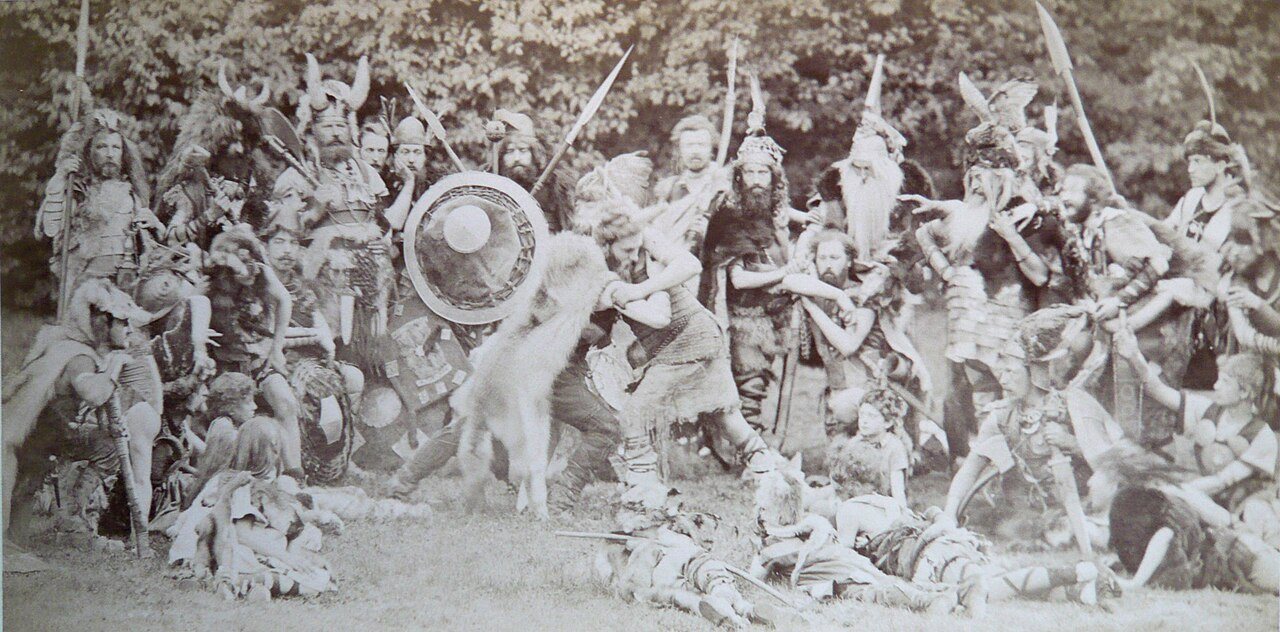
Photo: G. Overbeck, Düsseldorf, public domain, via Wikimedia Commons
In late October 2016, a group of students at Edward H. White High School in Jacksonville, Florida, posted a short video to Twitter. Nothing in it moved except the camera. Kids were frozen mid-laugh, mid-step, mid-whatever-they-were-doing, while whoever held the phone walked slowly through the room like a museum visitor.
That was more or less the whole idea. Within a few weeks it had a name, the Mannequin Challenge, and a soundtrack, and it had spread from classrooms to locker rooms to talk show sets and, at one point, a presidential campaign plane.
Ten years on, it's worth remembering how fast it happened, and why something so low effort caught on so hard. (I was going to say it was the last innocent internet trend, but I'm not sure there has ever been one of those.)
The rules, such as they were
There wasn't much to learn. Everyone picks a pose and holds it, ideally something mid-action that would be hard to keep up: a basketball hanging in a player's hand, a half-poured drink, someone stuck in the middle of falling off a chair. One person films, moving through the scene in a single take. The longer the shot and the more people involved, the more impressive it looked.
That low barrier mattered. The Ice Bucket Challenge two years earlier required a bucket, cold water and a willingness to get soaked. This one only needed a group of people and a phone, and a group of people was exactly what schools, offices and sports teams already had.
Black Beatles, by accident
Early on, a lot of the videos used the same song, "Black Beatles" by Rae Sremmurd featuring Gucci Mane, from the duo's 2016 album SremmLife 2. Nobody planned that, as far as anyone has been able to tell. It just stuck, the way background songs on viral clips tend to stick once a few popular ones use them.
It did wonders for the song. "Black Beatles" climbed to No. 1 on the Billboard Hot 100 in November 2016, and coverage at the time pretty much universally credited the challenge for the jump. Rae Sremmurd leaned into it and posted their own frozen videos.
There was a recent precedent for this. In February 2013, Billboard started counting YouTube views toward the Hot 100, and Baauer's "Harlem Shake," riding its own meme, went straight to the top. The Mannequin Challenge showed the same thing could happen without anyone trying: a song can still become a hit because thousands of strangers happened to pick it as background music.
When the celebrities and the teams showed up
Sports teams took to it quickly, because a locker room full of athletes frozen in absurd poses is fun to watch and good for a team's social accounts. NBA and NFL teams posted versions, as did college programs, and broadcasters were soon filming their own segments.
Then it went fully mainstream. Talk shows filmed versions with their studio audiences, and musicians did it on stage. In the final days of the 2016 presidential race, Hillary Clinton's campaign posted one filmed on the campaign plane with Jon Bon Jovi, which tells you how far a high school joke had traveled in about two weeks.
I think that was also roughly the moment it started to end. Once campaigns and brands are doing a meme, the people who started it usually move on, and by the end of the year most of the videos were coming from organizations rather than friends.
People have been doing this for centuries
Standing perfectly still for an audience is not a new idea. In the 1800s, the tableau vivant, or "living picture," was a popular entertainment and a parlor game, where people posed in costume to recreate famous paintings or scenes and held still while everyone looked. Victorian families did it at home for fun. The photo at the top of this page shows a big outdoor one, staged by the Malkasten artists' society in Düsseldorf in September 1877: a whole crowd in warrior costume, holding a battle scene still for the photographer (which, given the spears, took some nerve).
The Mannequin Challenge was basically a tableau vivant with a moving camera. What changed was distribution. A parlor game in 1870 reached the people in the parlor. A frozen classroom in 2016 reached millions of people on Twitter, Instagram and YouTube within days.
Why it worked when so many challenges flop
Lots of viral challenges die quickly, and some deserve to because they're dangerous. This one had a few things going for it. It was safe. It rewarded cooperation rather than one person showing off, so it worked well for groups. And it was surprisingly hard to do well, since holding a pose for a full minute while trying not to laugh is harder than it sounds. The best videos had small slip-ups (a twitching eyebrow, a blink, someone visibly trying not to crack), and those slip-ups made them feel more human.
It also suited the phones people had in 2016. Smooth handheld video had gotten good enough that a single steady walk-through looked almost cinematic.
If you want to see the classics now
Most of the famous 2016 versions are still up on YouTube and on the teams' and shows' own accounts, and searching "mannequin challenge 2016" plus a team or show name will usually turn them up. If you're tempted to try one at a family gathering this Thanksgiving, my one tip is to have whoever films walk slower than feels natural. Everyone in the frame will hate you for it, but it looks much better.
Enjoyed this story?Get a new one every day on social.