Photo: Andres Rueda, CC BY 2.0, via Wikimedia Commons
Fifty-eight years ago today, on November 22, 1968, the Beatles released a double album in Britain with almost nothing on the sleeve. No photo, no painting, no crowd of famous faces. Just white card with "The Beatles" pressed into it, so faintly you had to tilt it toward the light to read it.
The record was officially called The Beatles. Everyone called it the White Album within about five minutes, and the nickname stuck for good. It has 30 songs over four sides, running about an hour and a half, and it came out barely 18 months after Sgt. Pepper's Lonely Hearts Club Band, the record it seems almost designed to argue with.
It is also the album where you can hear the band starting to pull apart. That is the part I keep coming back to every time I put it on, because the music doesn't sound like a band in trouble. Mostly.
The songs came from a trip to India
A lot of the White Album was written far from Abbey Road. In early 1968 the four Beatles travelled to Rishikesh, in northern India, to study Transcendental Meditation with the Maharishi Mahesh Yogi. They didn't all stay the same length of time (Ringo left first, after about ten days), but John Lennon and Paul McCartney in particular came back with a pile of new songs.
With no electric instruments and not much else to do between sessions, they wrote on acoustic guitars. You can hear that in the finished album: "Blackbird", "Julia", "Mother Nature's Son" and "Dear Prudence" all started out as quiet fingerpicked pieces. "Dear Prudence" was written for Prudence Farrow, a fellow student at the ashram who was meditating so intensely she barely came out of her room.
In May 1968 the band met at George Harrison's house in Esher, Surrey, and taped rough demos of more than two dozen songs. Those Esher demos were bootlegged for years and finally came out officially on the album's 50th anniversary edition in 2018. If you only know the finished record, they are well worth a listen. Some of the songs sound happier there than they ever did again.
Five months in the studio, and a drummer who walked out
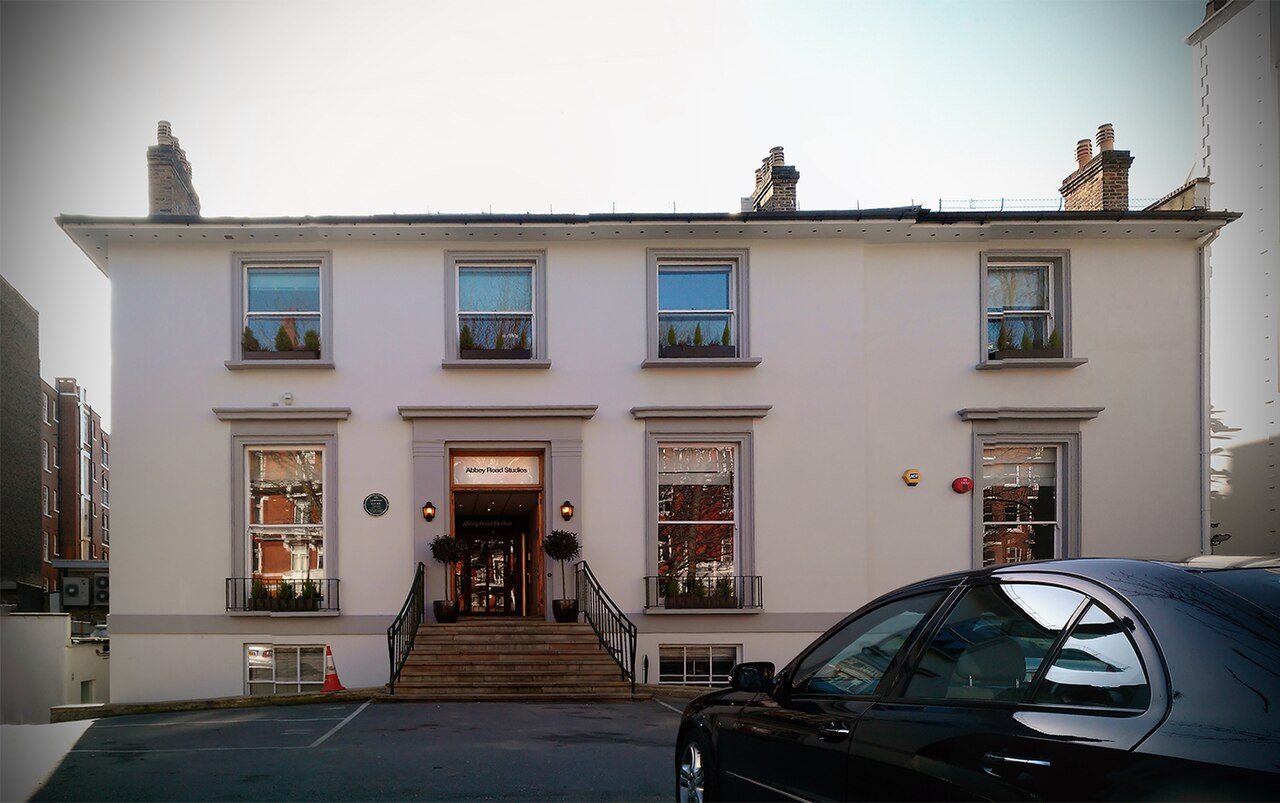
Recording began at EMI's studios on Abbey Road at the end of May 1968 and ran into mid-October. That was a long time for the Beatles, who had made their early albums in days.
The sessions were not a happy place to be. The four were working on separate songs, sometimes in separate rooms at the same time, and treating the others more like session players. Yoko Ono was now at Lennon's side in the studio every day, which broke an unwritten rule about partners staying out. In July the band's longtime engineer, Geoff Emerick, quit.
Then in August, Ringo Starr left. He felt shut out and unhappy with his own playing, and he went off on holiday. The other three carried on without him, and McCartney played drums on "Back in the U.S.S.R." and "Dear Prudence". After about two weeks Ringo came back to find his drum kit covered in flowers. I've always found that a sweet detail, given everything else that was going on.
Clapton, a fireman's bell and Revolution 9
The album is famously all over the place in style. There is hard rock ("Helter Skelter", "Yer Blues"), music hall ("Honey Pie"), country ("Don't Pass Me By", Ringo's first solo writing credit on a Beatles record), a ska-flavoured singalong ("Ob-La-Di, Ob-La-Da", which Lennon reportedly couldn't stand), and a lullaby sung by Ringo to close it out ("Good Night").
George Harrison brought in his friend Eric Clapton to play the lead guitar on "While My Guitar Gently Weeps". Clapton wasn't credited on the sleeve. Harrison later said the others behaved better with a guest in the room.
And then there's "Revolution 9", more than eight minutes of tape loops, voices and noise put together mainly by Lennon with Yoko Ono. Plenty of fans skip it. I don't think I've played it all the way through more than a handful of times, but I'd be sorry to see it gone, because the album wouldn't be the same odd, sprawling thing without it.
Producer George Martin thought the whole lot should be trimmed to one strong single album. The band said no. People have been arguing about which songs should have gone ever since, and nobody's list matches anyone else's.
The plain white sleeve
The cover was designed by the British pop artist Richard Hamilton. After the crowded collage of Sgt. Pepper, he went the other way entirely. Early copies were stamped with an individual serial number, which made each mass-produced record feel like a numbered art print.
Inside came a poster collage and four glossy portrait photos, one of each Beatle. Those little extras are why a complete early copy is worth more to collectors than you might expect.
The numbering paid off for one Beatle in particular. Ringo kept copy No. 0000001, and when it went to auction in 2015 it sold for $790,000, at the time a record for a commercially released album.
How to hear it today
The White Album came out in the United States three days after Britain, on November 25, 1968, and went to number one on both sides of the Atlantic. It has never really dropped out of print.
If you're coming to it fresh, the 2018 anniversary edition is the one to look for. Giles Martin, George Martin's son, remixed it in stereo, and the set includes the Esher demos. It's on the major streaming services too. My advice, for what it's worth: play the four sides in order, the way people did in 1968, and don't skip "Revolution 9" the first time. You can skip it every time after that.
Enjoyed this story?Get a new one every day on social.