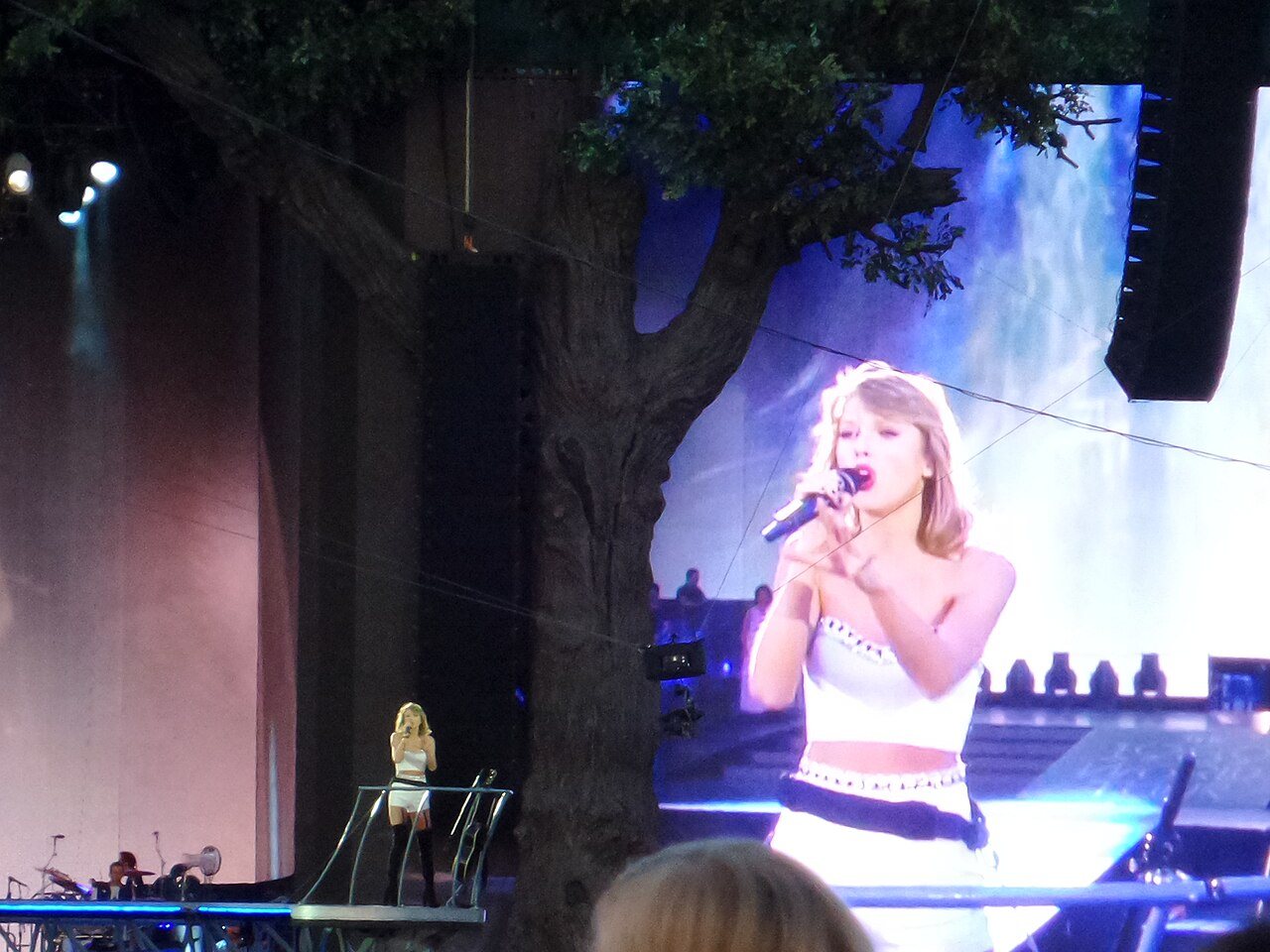
Photo: Gorupdebesanez, CC BY-SA 3.0, via Wikimedia Commons
In April 1966 a young Canadian musician was driving a 1953 Pontiac hearse through Los Angeles traffic on Sunset Boulevard. Stephen Stills and Richie Furay, heading the other way, spotted the hearse, guessed who was driving it, and turned around to chase it down. Inside was Neil Young, who had come south with bassist Bruce Palmer to find work. Within weeks the four of them were Buffalo Springfield.
Neil Young was born in Toronto on November 12, 1945, so he turned 81 yesterday. He has spent the six decades since that traffic jam making some of the gentlest songs in rock and some of the loudest, sometimes on the same album, and he has rarely done what anyone expected of him.
What follows is the short version. A full version would need several books (and he has written a couple himself).
A sick kid in Winnipeg with a plastic ukulele
Young caught polio in 1951, during one of the last big Canadian outbreaks before the vaccine, and spent time in hospital as a small child. His parents split up when he was a teenager, and he moved with his mother to Winnipeg. That's where he started playing in bands, beginning, by his own account, on a plastic ukulele before moving on to guitar.
His early group the Squires played around Winnipeg, and in the Canadian folk scene he crossed paths with Joni Mitchell and Stephen Stills before either of them was famous. Stills is the reason the Sunset Boulevard story works. They already knew each other, and Stills knew about the hearse, which is why the sight of one on Sunset made him swing the car around.
Buffalo Springfield and the crowded road to CSNY
Buffalo Springfield lasted only about two years, but it gave the world "For What It's Worth," written by Stills, and early Young songs such as "Mr. Soul" and "Broken Arrow." The band fought a lot and broke up in 1968.
Young went solo that year, and in 1969 he recorded Everybody Knows This Is Nowhere with a bar band he renamed Crazy Horse. That album has "Cinnamon Girl," "Down by the River" and "Cowgirl in the Sand," and it's the template for every long, ragged guitar jam he has played since. The same year he joined Crosby, Stills & Nash, which made the group CSNY and put him on the stage at Woodstock. In 1970, after National Guard troops shot four students at Kent State University, he wrote "Ohio," and the band had it recorded and in shops within weeks.
Heart of Gold and the trip into the ditch
Harvest came out in 1972 and was the best-selling album in the United States that year. "Heart of Gold" went to number one, and it's still his only American number one single.
He then swerved. In the liner notes to his 1977 compilation Decade, Young wrote that "Heart of Gold" put him in the middle of the road, that travelling there soon became a bore, and that he headed for the ditch. The ditch, as fans now call it, is a run of dark, rough records made in the shadow of friends' deaths, including Danny Whitten of Crazy Horse: Time Fades Away, On the Beach and Tonight's the Night. They sold far less than Harvest. A lot of people, me included, think they're his best work, though I wouldn't put Tonight's the Night on at a dinner party.
Old Black, Rust Never Sleeps and the lawsuit
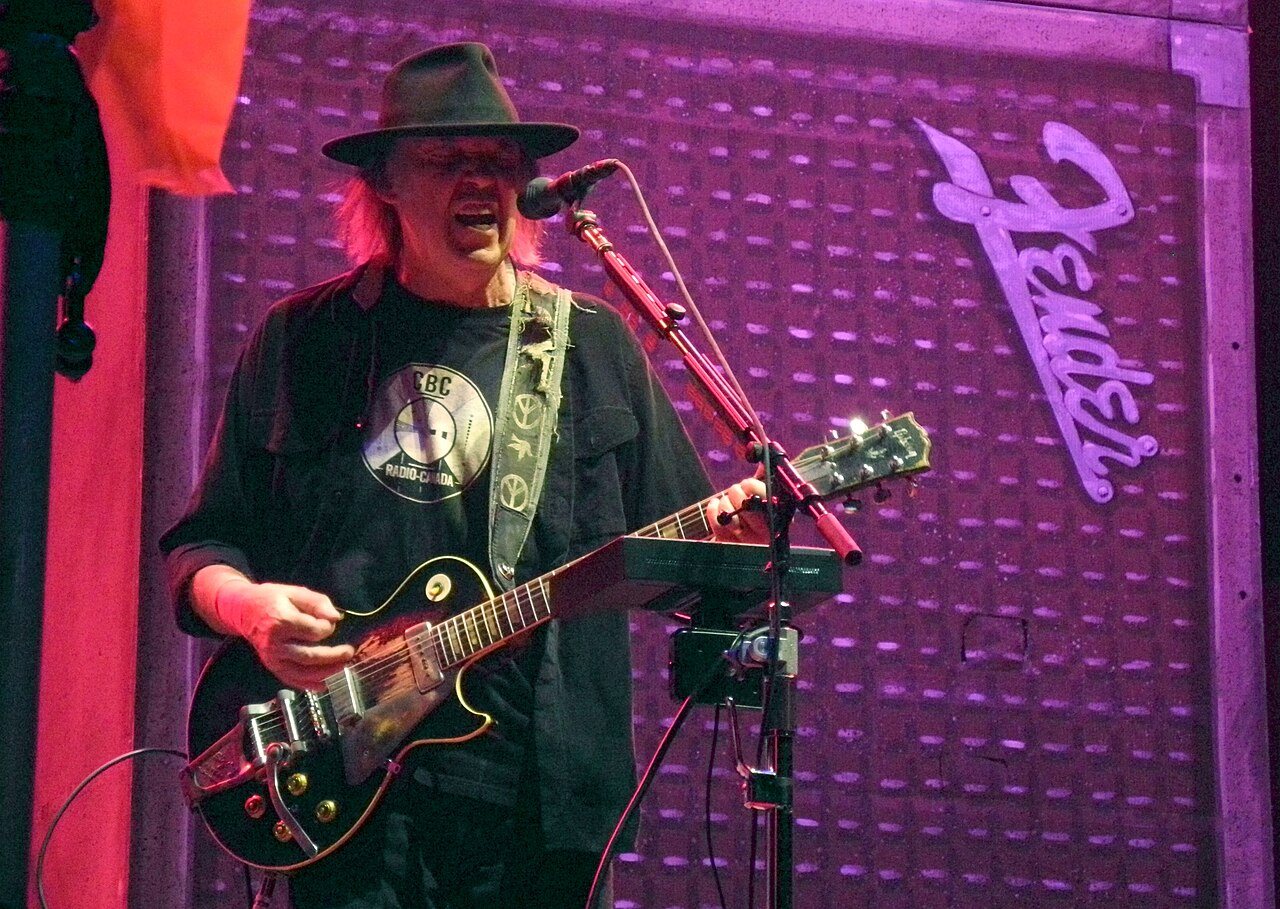
The guitar in the photo above is Old Black, a 1950s Gibson Les Paul painted black, which Young has played for most of his career. It's behind the howl on Rust Never Sleeps (1979), the album with "Hey Hey, My My (Into the Black)" and its line about it being better to burn out than to fade away.
The 1980s were stranger. Young made a synthesizer album with vocoder vocals (Trans) and a rockabilly record (Everybody's Rockin'), and in 1983 his label, Geffen Records, sued him for making music it said wasn't representative of Neil Young. Suing an artist for not sounding enough like himself is one of the odder moments in record industry history. The case was settled, and he later returned to Reprise.
In 1985 he joined Willie Nelson and John Mellencamp to start Farm Aid, which still holds its concert every year.
The godfather years
By the early 1990s younger bands were citing him constantly, and the press started calling him the godfather of grunge. Ragged Glory (1990) and his work with Pearl Jam, who backed him on the 1995 album Mirror Ball, made the case well enough. He was inducted into the Rock and Roll Hall of Fame as a solo artist in 1995, and again as a member of Buffalo Springfield in 1997.
He has also kept picking fights on principle. He backed a high-resolution music player called Pono in the 2010s because he hated how compressed digital audio sounded. In 2022 he pulled his catalogue from Spotify in protest at the vaccine misinformation it was hosting on The Joe Rogan Experience, then returned in 2024. You can disagree with him on any of it, and plenty of people have, but he has never been shy about it.
Where to start listening this week
If you only know "Heart of Gold," try a three-album tour: Everybody Knows This Is Nowhere for Crazy Horse at full volume, Harvest for the soft side, and Rust Never Sleeps, which is both at once (acoustic on side one, electric on side two). If you want to go deeper, the Neil Young Archives website holds a huge share of his recorded work, along with notes on when and where it was made, and he keeps adding to it.
He hasn't slowed down much. In 2025 he released Talkin to the Trees with a new band, the Chrome Hearts, and took it out on the road, long guitar solos included. If you're marking his birthday this weekend, Zuma played loud seems about right.
Enjoyed this story?Get a new one every day on social.