Traverse City Rotary Club, CC BY 2.0, via Wikimedia Commons
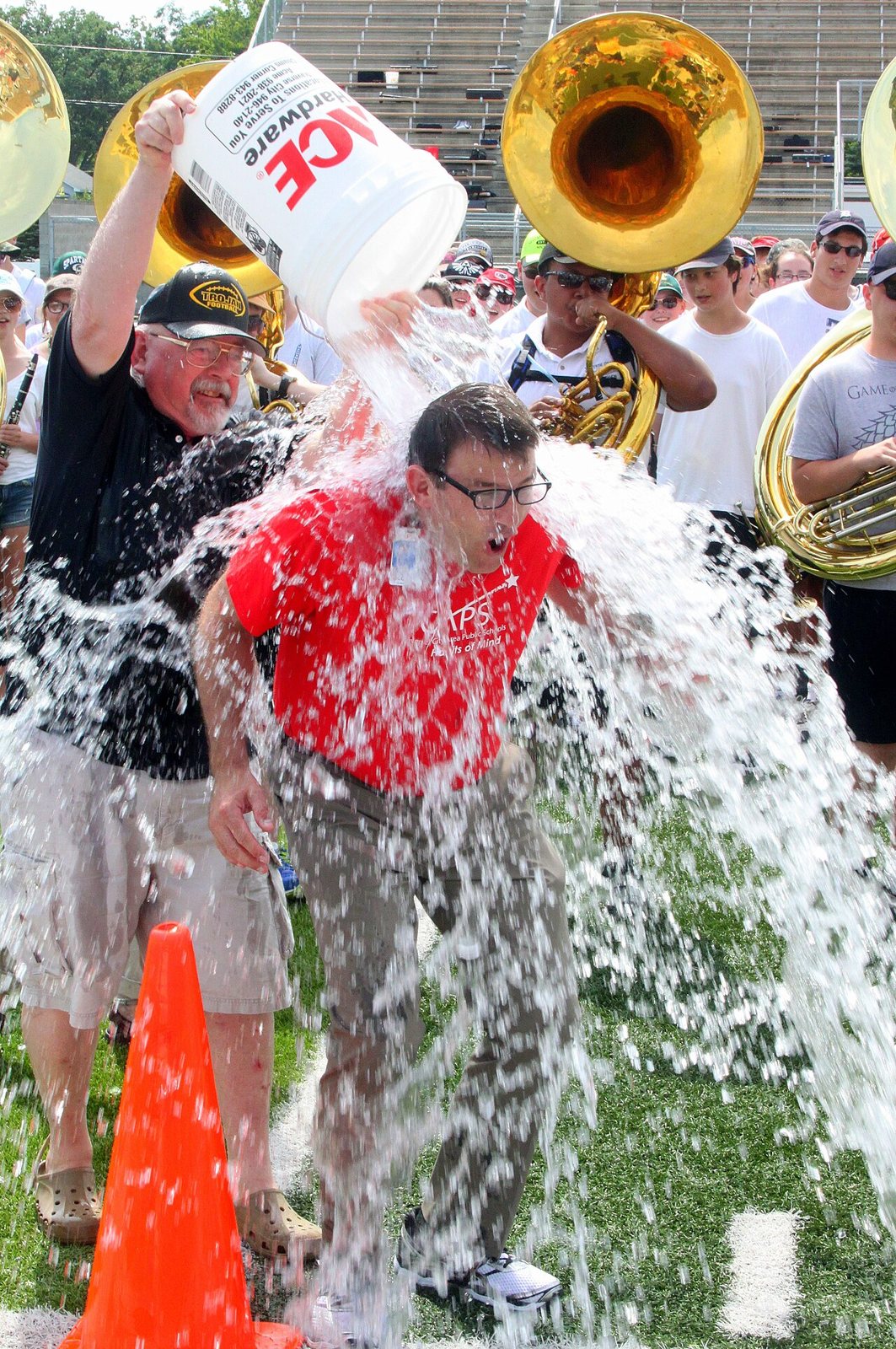
For about six weeks in the summer of 2014, it was almost impossible to open Facebook without watching someone yelp as a bucket of ice water hit them. Your cousin did it, your boss did it, and Bill Gates built a little scaffold so he could do it properly, and George W. Bush did it outside his house while Laura Bush poured.
The rules were simple. Once you were nominated, you had 24 hours to either dump ice water on your head on camera or donate to ALS research, and a lot of people did both. Then you named three more people. By the end of that summer, the ALS Association said it had received more than $115 million in donations, compared with a few million over the same weeks the year before.
It also drew plenty of eye rolling at the time. I'll admit I was one of the people rolling my eyes. Twelve years later, though, the story of what that money actually did is better than most of us expected.
The cold water challenge came first
The idea of soaking yourself for charity was already floating around before ALS got attached to it. In early 2014, assorted "cold water challenges" were circulating on social media for different causes, often with no particular cause at all. Some people jumped into lakes. Some used a hose.
What changed things was a link to a specific disease and to specific people living with it. ALS, or amyotrophic lateral sclerosis (also known in the U.S. as Lou Gehrig's disease), destroys the nerve cells that control muscles. Most patients lose the ability to move, speak, swallow and eventually breathe. There is no cure, and in 2014 there were very few treatments.
Pat Quinn, Pete Frates and the Boston push
Two young men with ALS are the main reason the challenge ended up being about ALS at all.
Pat Quinn, from Yonkers, New York, had been diagnosed in 2013 at age 30. He picked up the challenge in July 2014 and pushed it hard through his own networks. Pete Frates, a former captain of the Boston College baseball team, had been diagnosed in 2012 and had already spent two years raising money and awareness. When the challenge reached Frates and his family in late July, the Boston sports world jumped in behind them, and from there it went national within days.
Neither of them is with us now. Frates died in December 2019 at 34, and Quinn died in November 2020 at 37. Both kept campaigning for years after the buckets stopped, which is worth remembering whenever someone dismisses the whole thing as a fad.
When the celebrities showed up
Once famous names got involved, the challenge snowballed. Mark Zuckerberg did it and nominated Bill Gates. Oprah did it. LeBron James did it. Taylor Swift did it. Charlie Sheen, true to form, filled his bucket with $10,000 in cash instead of ice and said it was going to ALS research.
President Obama was nominated by Ethel Kennedy and chose to donate instead of getting wet, which was probably the correct call for a sitting president. By late August, the ALS Association was reporting hundreds of thousands of new donors, people who had never given to it before.
The backlash, and what it got right
The criticism was loud and not entirely wrong. Some people called it slacktivism, the habit of doing something visible online in place of doing something useful. Plenty of videos never mentioned ALS at all. California was in a serious drought that summer, and the sight of people wasting buckets of water didn't land well there (Matt Damon, making a point about water shortages, used water from his toilet tank).
Others worried that one disease getting a sudden flood of money would pull donations away from other charities. That's a fair question, and researchers who study giving have argued about it ever since. What nobody could argue with was the size of the check.
What the $115 million paid for
This is the part that rarely made the news feed. The ALS Association put the bulk of the money into research, with the rest going to patient care services, community programs and public education.
One of the projects it helped fund was Project MinE, an international effort to sequence the genomes of thousands of ALS patients. In 2016, researchers working on that project identified NEK1 as a gene associated with ALS, and the ALS Association publicly credited Ice Bucket Challenge donations for helping make the work possible. Other gene discoveries followed in later years, giving drug developers new targets to aim at.
The money also went into clinical trials and into programs that help patients get equipment such as communication devices and power wheelchairs, which can cost families a fortune. The challenge didn't produce a cure, and nobody serious claims it did. What it did was speed up research that, in 2014, had been short of money for a long time.
Why it still matters for the next viral fundraiser
The Ice Bucket Challenge has come back in smaller ways since. In 2025, students at the University of South Carolina revived it as a mental health campaign, and it briefly took off again on TikTok and Instagram.
If you're ever tempted to join one of these, the lesson from 2014 is pretty practical. Check that the cause is named and that the charity is real, and give something even if you also post the video. Then nominate your three people, since that part apparently still works.
Enjoyed this story?Get a new one every day on social.