Photo: Hutschi, CC BY-SA 3.0, via Wikimedia Commons
Put on almost any Halloween playlist this week and sooner or later you'll hear it: a high, quivering, slightly unhinged whine that slides from note to note like a ghost clearing its throat. Most people couldn't name the instrument. Plenty of people assume it's a synthesizer, or a singer, or a saw.
It's usually a theremin, or something built to imitate one. It is about a hundred years old, it was invented by accident in a Russian physics lab, and it is the only instrument I know of that you play without laying a finger on it.
It's one of my favorite odd corners of music history, so with Halloween two days off, here's how a scientific curiosity ended up as pop culture's official sound for "something is wrong."
An accident in a Petrograd lab
The inventor was Lev Termen, a young Russian physicist who later became known in the West as Leon Theremin. Around 1920 he was working on electronic equipment at a research institute in Petrograd (now St. Petersburg), including devices that reacted to the nearness of a human body. He noticed that moving his hand near one circuit changed the pitch of the tone it produced, and he had trained as a cellist, so he started playing tunes on it.
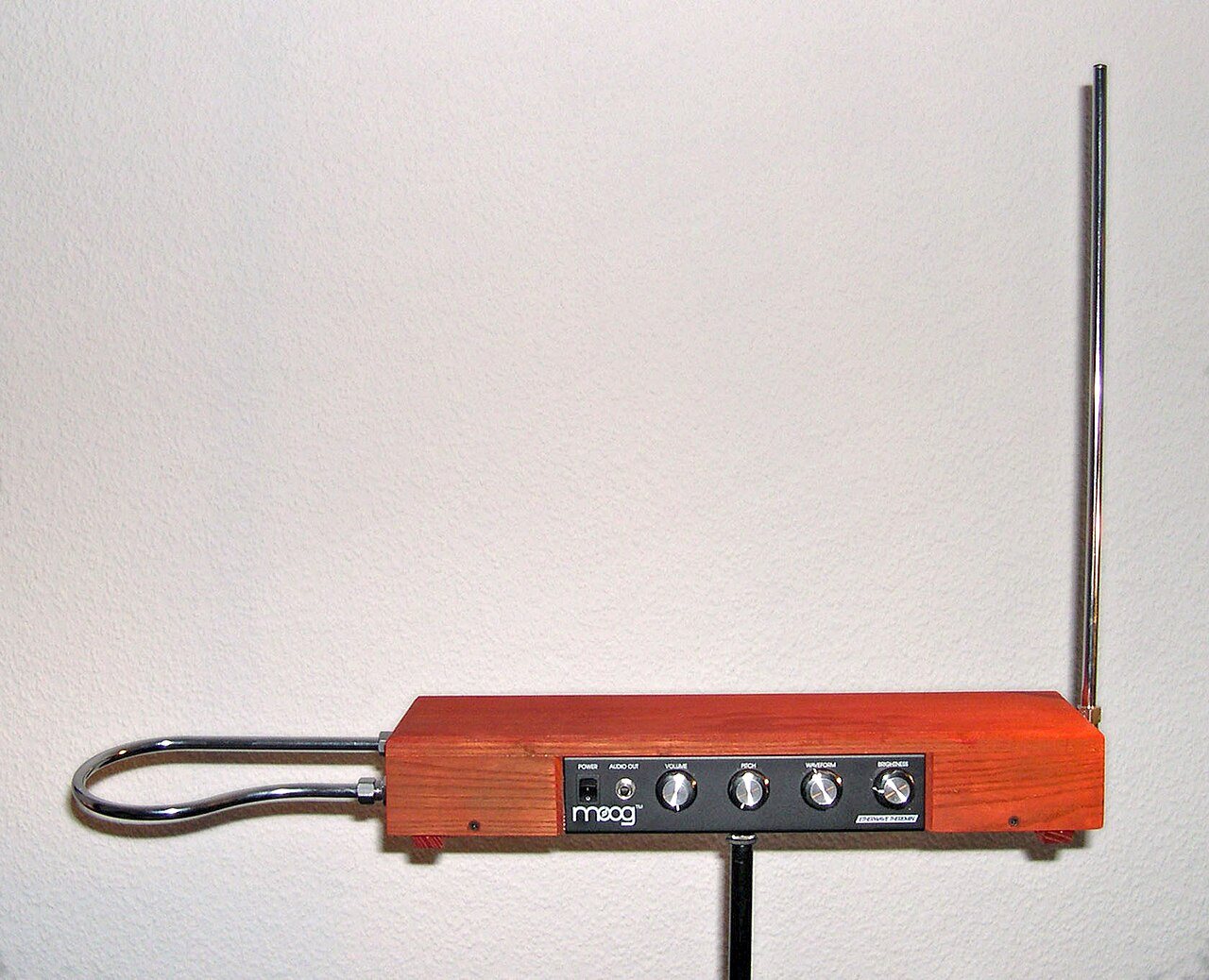
The design that came out of that is still basically the same today. One antenna sticks straight up and controls pitch: the closer your hand, the higher the note. A second antenna, usually a loop off to the side, controls volume. Your body is part of the circuit. There are no keys, frets or markers, which is why playing one in tune is so hard and why a beginner sounds like a haunted kettle.
Termen demonstrated it around Soviet Russia, including, by the usual account, to Lenin himself, and then took it on tour through Europe and to the United States in the late 1920s.
Selling the future in 1929
In America he patented the design, and RCA licensed it and put a factory-made theremin on sale in 1929. It was pitched as an instrument anyone could pick up. That turned out to be optimistic. The stock market crashed that autumn, the instrument was expensive and tricky, and RCA only sold a few hundred before giving up.
The person who proved what it could really do was Clara Rockmore, a Lithuanian-born violin prodigy who had moved to the theremin after problems with her arm ended her violin career. She worked with Termen on improvements, and her recordings of classical pieces are still the gold standard. If your idea of the theremin is purely B-movie wobble, her playing is a real surprise. It sounds less like a ghost and more like a singer with impossible breath control.
Termen's own story then took a dark turn. He left New York suddenly in 1938 and returned to the Soviet Union, where he was arrested and sent to work in a prison laboratory. Among the things he designed there was a passive listening device hidden inside a carved wooden Great Seal that was presented to the American ambassador in Moscow. It hung in the residence for years before it was found in 1952. He lived to 97 and died in 1993.
Hollywood finds its haunted voice
The theremin's film career started in the mid-1940s. Composer Miklós Rózsa used it to stand for a troubled mind in two 1945 films, Billy Wilder's The Lost Weekend and Alfred Hitchcock's Spellbound. The Spellbound score won the Academy Award. The player on many of these sessions was Samuel Hoffman, a podiatrist by day who became Hollywood's go-to thereminist.
Then came the 1950s and the flying saucers. Bernard Herrmann's score for The Day the Earth Stood Still (1951) used two theremins, and after that the sound became shorthand for aliens, monsters and anything from outer space. Once a sound gets that kind of job in the movies, it tends to keep it. A lot of the spooky novelty records and haunted house sound effects that followed were borrowing from that era.
One small correction while we're here, because I hear it every October: the eerie wordless melody in the original Star Trek theme isn't a theremin. It's a human soprano. Easy mistake, and a good compliment to the singer.
From the Beach Boys to Led Zeppelin
Rock picked it up in the 1960s, sometimes with a cheat. The famous high wail in the Beach Boys' Good Vibrations (1966) was played on an Electro-Theremin, a slide-controlled instrument built by trombonist Paul Tanner to get a theremin-like sound with more control. Purists will tell you it doesn't count. I think it counts as a tribute.
Jimmy Page played a real theremin on stage with Led Zeppelin, waving his hand at it during Whole Lotta Love, and you can see him do it in the concert film The Song Remains the Same. Plenty of bands since have brought one out for a song or two, usually for exactly the effect you'd expect.
The teenager who built theremins and then the synth
There's another reason the theremin matters to anyone who likes electronic music. Robert Moog started out building theremins as a teenager, and his first business, in the 1950s, sold theremins and theremin kits. Only later did he move on to the modular synthesizers that carried his name into studios everywhere. You can draw a fairly straight line from Termen's lab to the synth sounds on half the records of the 1970s, and Moog's company still sells a theremin today.
How to hear (or play) one this Halloween
If you want the real thing rather than a sound effect, start with Clara Rockmore's recordings, then put on the Spellbound and Day the Earth Stood Still scores back to back. The 1993 documentary Theremin: An Electronic Odyssey tells Termen's story and is worth finding.
If you're tempted to play one, beginner kits and small instruments are easy to buy now, and there are free phone apps that fake it with the touchscreen. Fair warning: your first attempt at a recognizable tune will sound terrible, which, this week of all weeks, is arguably the point.
Enjoyed this story?Get a new one every day on social.