Photo: Alexkom000, CC BY 4.0, via Wikimedia Commons
Bruce Lee was born on November 27, 1940, at the Chinese Hospital in San Francisco's Chinatown. His father, the Cantonese opera star Lee Hoi-chuen, happened to be touring the United States at the time, which is how one of Hong Kong's biggest film stars ended up holding an American birth certificate.
He would be 86 today. He died at 32, in July 1973, having finished just four films as a leading man. That is a thin résumé by any normal measure. It also happens to be the most influential four-film run in the history of action cinema, and I don't think that's much of an exaggeration.
The road to those four films was longer and stranger than the legend usually allows.
A child actor long before he was a fighter
The family went back to Hong Kong when Bruce was a baby, and thanks to his father's connections he was in front of a camera early. He appeared in around 20 films as a child and teenager. The best known is The Kid (1950), where he plays a street-smart orphan, and he's already doing the thing he'd do for the rest of his career: drawing your eye in every scene he's in.
As a teenager he studied Wing Chun kung fu under the teacher Ip Man, and he also got into enough street fights that his parents worried. In 1959, at 18, he was sent to the United States. He finished high school in Seattle, studied at the University of Washington, where he took philosophy courses, and started teaching martial arts to pay the bills. He met his wife, Linda Emery, through those classes.
The sidekick who stole The Green Hornet
Lee's demonstration at the Long Beach International Karate Championships in 1964 got him noticed, and the producer William Dozier cast him as Kato, the driver and partner of the masked hero in ABC's The Green Hornet. The show ran for a single season, 1966 to 1967, 26 episodes in all.
It was not a hit in America. In Hong Kong, it went out as something closer to "The Kato Show," which tells you who audiences there thought the star was. Lee was moving so fast in his fight scenes that the crew reportedly asked him to slow down so the camera could catch it.
After the show ended, Hollywood didn't quite know what to do with him. He worked as a private instructor to stars including Steve McQueen and James Coburn, and he spent these years developing his own approach, which he called Jeet Kune Do. He took small parts, like a memorable scene in the 1969 detective film Marlowe where he demolishes James Garner's office. The leading roles weren't coming. Lee's family and many biographers have said he pitched the idea that became the TV series Kung Fu (1972), which went to David Carradine; Warner Bros. never confirmed that version, so file it as contested.
Four films that rewired the genre
Lee went back to Hong Kong and signed with Raymond Chow's young studio, Golden Harvest. The Big Boss (1971) broke box office records in Hong Kong. Fist of Fury (1972) broke them again. In that one he plays a student avenging his teacher in Japanese-occupied Shanghai, and the scene where he smashes a sign reading "No dogs and Chinese allowed" still plays like a punch to the stomach.
The Way of the Dragon (1972) he wrote and directed himself, and it ends with a fight against Chuck Norris in the Colosseum in Rome. Then came Enter the Dragon, a co-production between Warner Bros. and Golden Harvest and the first martial arts film made with a major Hollywood studio. It was released in August 1973.
Lee was not there to see it. He died in Hong Kong on July 20, 1973. The official finding was cerebral edema, which an inquest linked to a reaction to a painkiller; doctors and writers have argued about other explanations ever since, and I won't pretend to settle it here. He is buried at Lake View Cemetery in Seattle, beside his son Brandon, who died in 1993 in an accident on the set of The Crow.
Why the fights still look modern
Watch a Lee fight next to most American screen brawls of the early 1970s and the difference is obvious. He kept the camera back and the shots long enough that you could see the moves were real. He sold every hit with his face. And he gave the fights a story: a scene starts out playful and turns deadly serious halfway through.
The influence runs straight through Jackie Chan, who worked as a stuntman on Fist of Fury and Enter the Dragon, to the Hollywood action films of the 1990s and beyond. Quentin Tarantino dressed Uma Thurman in a yellow tracksuit in Kill Bill: Volume 1 as a nod to Lee's outfit in the unfinished Game of Death. Pretty much any fight scene built around a single long take owes him something.
Be water, and where to start
Lee's line "Be water, my friend" comes from a 1971 television interview with the Canadian host Pierre Berton, and it has had an odd second life. Protesters in Hong Kong adopted it as a slogan in 2019, and it's printed on more motivational posters than he could ever have imagined.
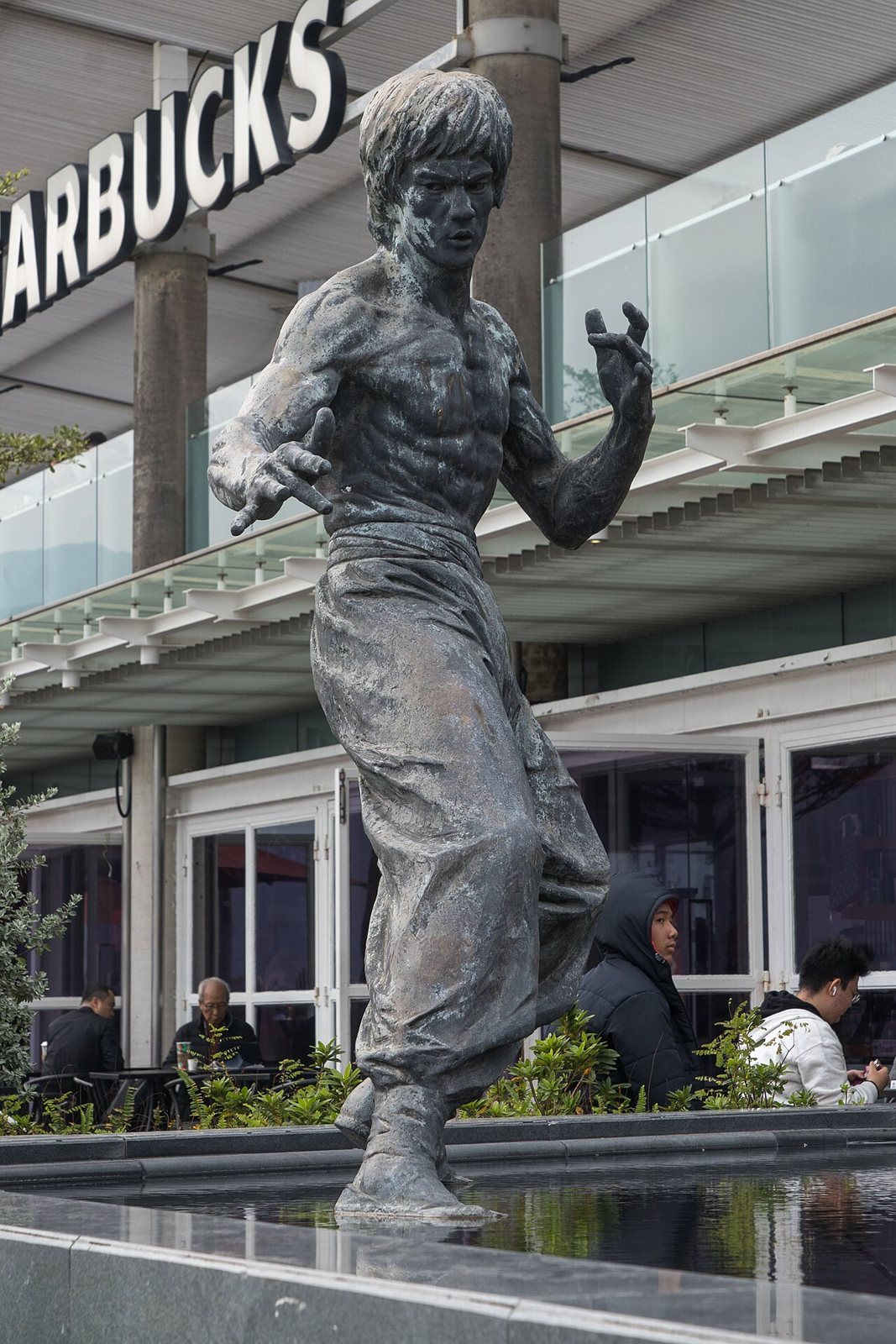
If you've never seen a Bruce Lee film, start with Enter the Dragon, because it's the easiest to find and the most polished. Then go back to Fist of Fury, which I'd argue is the better film, rougher edges and all. There's a bronze statue of him on Hong Kong's Avenue of Stars if you're ever passing through, usually surrounded by people copying his stance for photos. Most of them weren't born when he died.
Enjoyed this story?Get a new one every day on social.