Walt Disney / Ub Iwerks, public domain, via Wikimedia Commons
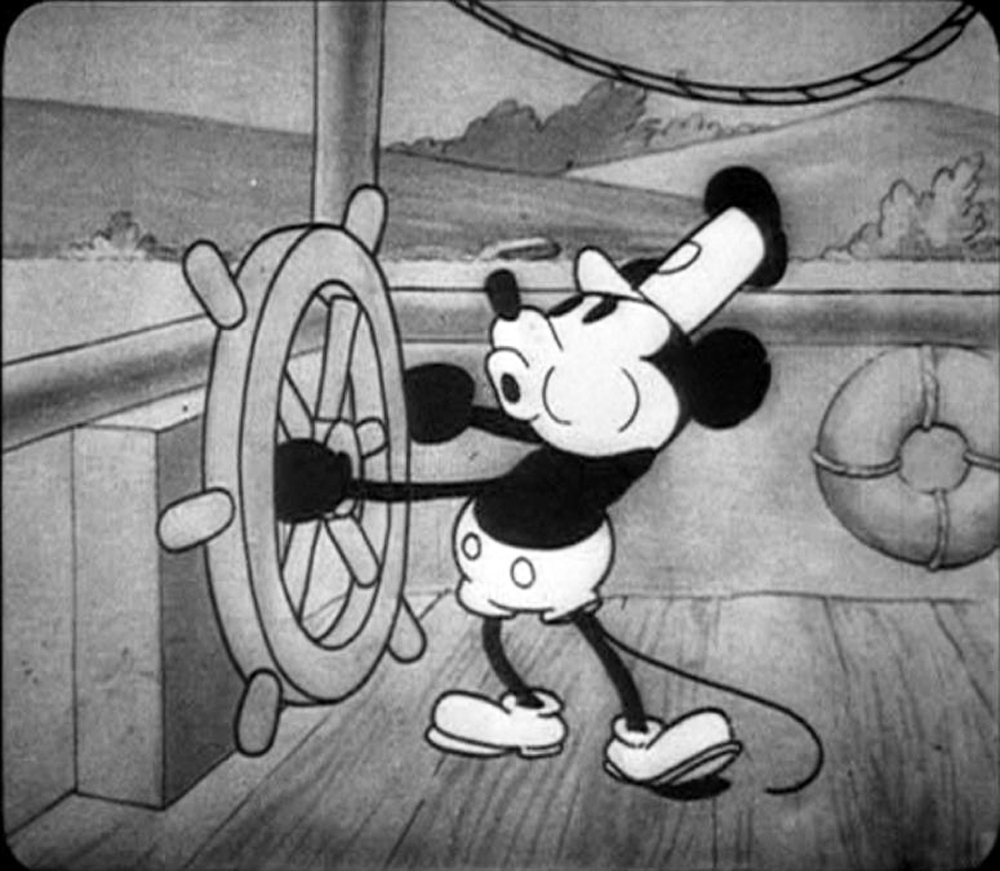
On November 18, 1928, audiences at the Colony Theatre in New York sat down for a feature called Gang War and got a short cartoon first. It ran about seven minutes. A skinny black-and-white mouse steered a riverboat, whistled, and turned a goat into a music box.
That cartoon was Steamboat Willie, and Disney still treats its opening night as Mickey Mouse's birthday. Yesterday was the 98th.
What made people talk was the sound. The whistle, the clanks, the music and the barnyard noises were all timed to the picture, which was still a novelty in a year when most cinemas had only just started wiring up for talkies.
Mickey's third cartoon, released first
Steamboat Willie was not the first Mickey Mouse cartoon Walt Disney's studio made. Plane Crazy and The Gallopin' Gaucho were finished earlier in 1928 as silent shorts, and neither found a distributor.
Disney had good reason to be nervous. Earlier that year he had lost the rights to his previous star, Oswald the Lucky Rabbit, along with most of his animators, in a contract fight with his distributor. Mickey was the replacement, designed largely by Ub Iwerks, one of the few animators who stayed. Iwerks did most of the animation on Steamboat Willie as well.
The Jazz Singer had opened in October 1927, and Disney decided the next mouse cartoon would have a synchronized soundtrack. The two silent ones could wait (they were later released with sound added).
How they synced the music
The studio worked out its timing in-house, planning the action to a steady beat so that each movement could land on the music. The soundtrack was then recorded in New York using the Cinephone system sold by Pat Powers, a film-business operator who would later fall out with Disney over money.
The cartoon borrows from two old tunes, "Steamboat Bill" and "Turkey in the Straw." The title is a nod to Buster Keaton's Steamboat Bill, Jr., released earlier the same year. Walt Disney supplied Mickey's voice himself, though there is hardly any dialogue; Mickey mostly whistles, squeaks and laughs.
The plot, such as it is, has Mickey as a deckhand under a bullying captain (Pete, in an early form), picking up Minnie from the riverbank and then playing whatever is lying around as an instrument. A cow's teeth become a xylophone. Some of the animal gags have aged badly, and modern viewers tend to wince at the way the livestock gets treated. It is also, for its time, very funny.
Quick bookings and a word animators still use
Reviews were warm, and the cartoon was soon booked into other theaters. Mickey caught on quickly, and Disney added sound to the two earlier shorts and kept producing new ones.
It is worth being precise about the history. Steamboat Willie is often called the first sound cartoon, and it was not; the Fleischer studio and others had experimented with sound cartoons before 1928. What Disney got right was the tight match between picture and sound, so the music felt like part of the gag rather than a backing track. Animators still call that close syncing "mickey-mousing," which tells you who got the credit.
In 1998 the Library of Congress added Steamboat Willie to the National Film Registry. Since 2007, the clip of Mickey whistling at the wheel has opened Walt Disney Animation Studios films as its production logo, so you have probably seen it more recently than you think.
The cartoon that became public property
Steamboat Willie also became the most famous example in a long argument about copyright. When Congress extended copyright terms in 1998, critics nicknamed the law the "Mickey Mouse Protection Act," because it pushed back the date when Disney's earliest mouse would leave copyright.
That date finally arrived on January 1, 2024. Under current US law, works published in 1928 entered the public domain after 95 years, and Steamboat Willie went with them.
Only that 1928 version of Mickey and Minnie became free to use. Later designs, such as the gloved, colorful Mickey most people picture, are still under copyright, and Disney's trademarks on Mickey as a brand did not expire. Within days of the change, independent creators announced horror projects starring the old steamboat mouse, which surprised nobody who has spent time on the internet.
Watching it today
The full cartoon is short enough to watch on a coffee break, and because it is in the public domain in the US, copies are easy to find, including through public archives. Watch it once for the gags and once with the sound in mind; the jokes are built around the noises, and that is what made it new in 1928.
If you want the fuller picture, watch Plane Crazy next. The design is the same mouse, and the gap between the silent version and Steamboat Willie shows exactly what sound changed. Mickey turns 100 in November 2028, and I would bet good money the whistling clip will be front and center when he does.
Enjoyed this story?Get a new one every day on social.