Photo: Michael Garlick, CC BY-SA 2.0, via Wikimedia Commons
On November 4, 2001, the Odeon in London's Leicester Square was dressed up as Hogwarts for a world premiere. Twelve days later the film opened in Britain and the United States, and it took the biggest U.S. opening weekend anyone had ever seen.
That was 25 years ago this month, and Warner Bros. has spent 2026 marking it with theatrical re-releases and a lot of merchandise. The timing is hardly an accident. HBO's series, a full retelling of the same story with a new cast, is due on Christmas Day. So before a new Harry arrives, it seems like a good moment to go back over how the first one happened, because a surprising amount of it came down to luck and a few stubborn people.
A secretary's tip and a reported £1 million
The film starts with an office reading pile. In late 1997 a copy of the first book reached producer David Heyman's London office, a secretary read it and told him it was worth his time, and he agreed. In 1999 J.K. Rowling sold Warner Bros. the rights to the first four books for a reported £1 million. Given what followed, that figure now looks almost quaint.
Rowling's condition was what shaped the movie. She wanted the main cast British and Irish wherever possible, and she kept real creative control. She approved the dialogue Steve Kloves added to his script, and she had one line taken out because it would have contradicted something coming in a book she hadn't published yet.
Spielberg walks, the Home Alone guy arrives
For a while the obvious director was Steven Spielberg, who negotiated for the job. He wanted to fold the novels together into one animated film, Warner Bros. was against both ideas, and the deal fell apart. I think that's the biggest what-if in the whole franchise, and I'm glad it stayed a what-if.
Chris Columbus got there through his daughter, who had pushed him to read the book. He was appointed on March 28, 2000, on the strength of family films like Home Alone and Mrs. Doubtfire, and he moved his family to Britain to do it. It was not a glamorous choice. It turned out to be the correct one, since what the project needed more than a visionary was someone who could get great work out of children and keep a very large machine on schedule.
Finding three kids
The search for Harry ran for seven months. Columbus had already spotted Daniel Radcliffe in the BBC's David Copperfield, but the casting director assumed his parents would never agree. Then Heyman and Kloves found themselves sitting near the boy at the theatre, and the persuading began in earnest. The producers promised his parents he would be shielded from the press, a promise that must have felt a bit optimistic by about 2002.
Emma Watson came through her Oxford theatre teacher and went through more than five interviews, ahead of thousands of other kids. Rupert Grint's route remains the best of the three. He saw a Newsround report on the open casting and sent in a video of himself rapping about wanting the part. Neither Watson nor Grint had done anything beyond school plays.
The grown-ups took less finding, mostly. Rowling got the two actors she most wanted in Robbie Coltrane and Maggie Smith. Richard Harris turned down Dumbledore until his granddaughter told him she'd never speak to him again if he didn't do it, which may be the most effective bit of agenting in film history.
Every stone scene, shot twice
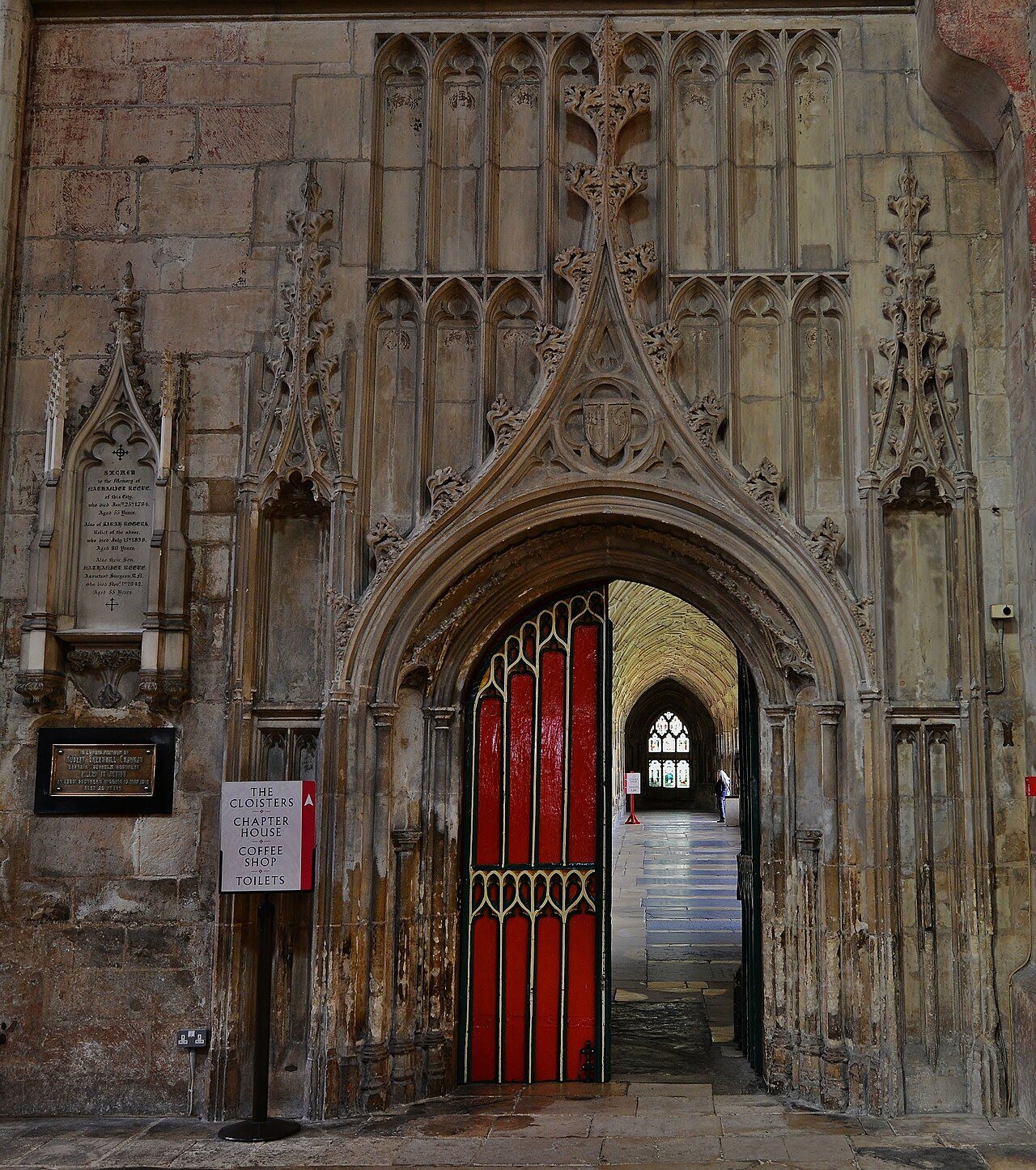
Shooting began on September 29, 2000, and ran for 180 days, based at Leavesden Studios in Hertfordshire. Gloucester Cathedral and Alnwick Castle stood in for most of Hogwarts, Christ Church in Oxford supplied the trophy room, and Australia House in London became Gringotts. King's Cross played itself, as the book requires.
Then there was the American title problem. The U.S. publisher had called the book Harry Potter and the Sorcerer's Stone, so every scene that named the thing was filmed twice, once with each word. Picture a ten-year-old doing that take after take, and you start to see why Columbus said afterward he was exhausted. He directed the sequel and then stepped back to producing.
John Williams, who had worked with Columbus on Home Alone and Stepmom, came on in August 2000 after James Horner passed. His Hedwig's Theme outlived every other decision in this article, and you could probably hum it right now.
What it earned
The film took $90.3 million in its U.S. opening weekend and about $974 million in its first theatrical run. Later re-releases pushed it past $1 billion, with sources differing slightly on the exact total. It picked up three Oscar nominations, for art direction, costume design and original score.
Reviews were mostly warm, and watching it now I'd add one complaint: it's a very faithful film, sometimes to a fault. It did the one thing the series needed, which was to convince audiences these three children could carry seven more movies.
What HBO is attempting
The new series will run for seven seasons, one per book, over roughly a decade of production. Francesca Gardiner, of Succession, writes, and Mark Mylod directs. Dominic McLaughlin plays Harry, Arabella Stanton plays Hermione and Alastair Stout plays Ron, with John Lithgow as Dumbledore, Janet McTeer as McGonagall, Nick Frost as Hagrid and Paapa Essiedu as Snape. Warwick Davis returns as Flitwick, reported as the only actor carried over from the movies. The first trailer, released in March, gave more time to Harry's life with the Dursleys than the film ever did.
If you want a refresher first, keep an eye on your local cinema's listings, since Warner Bros. has promised anniversary screenings around the world. Failing that, the original runs 152 minutes, which leaves you plenty of time before December 25.
Enjoyed this story?Get a new one every day on social.